Robotics is a branch here, not a single robot.
NebuCoders members design, wire, program and compete with real machines. MuseBot AI is the first one to make it out the door and onto a competition floor. It is not meant to be the last — and the people who build the next one are the ones reading this.
What we have built
One machine, fully documented. We would rather show you one that runs than five that are drawings.
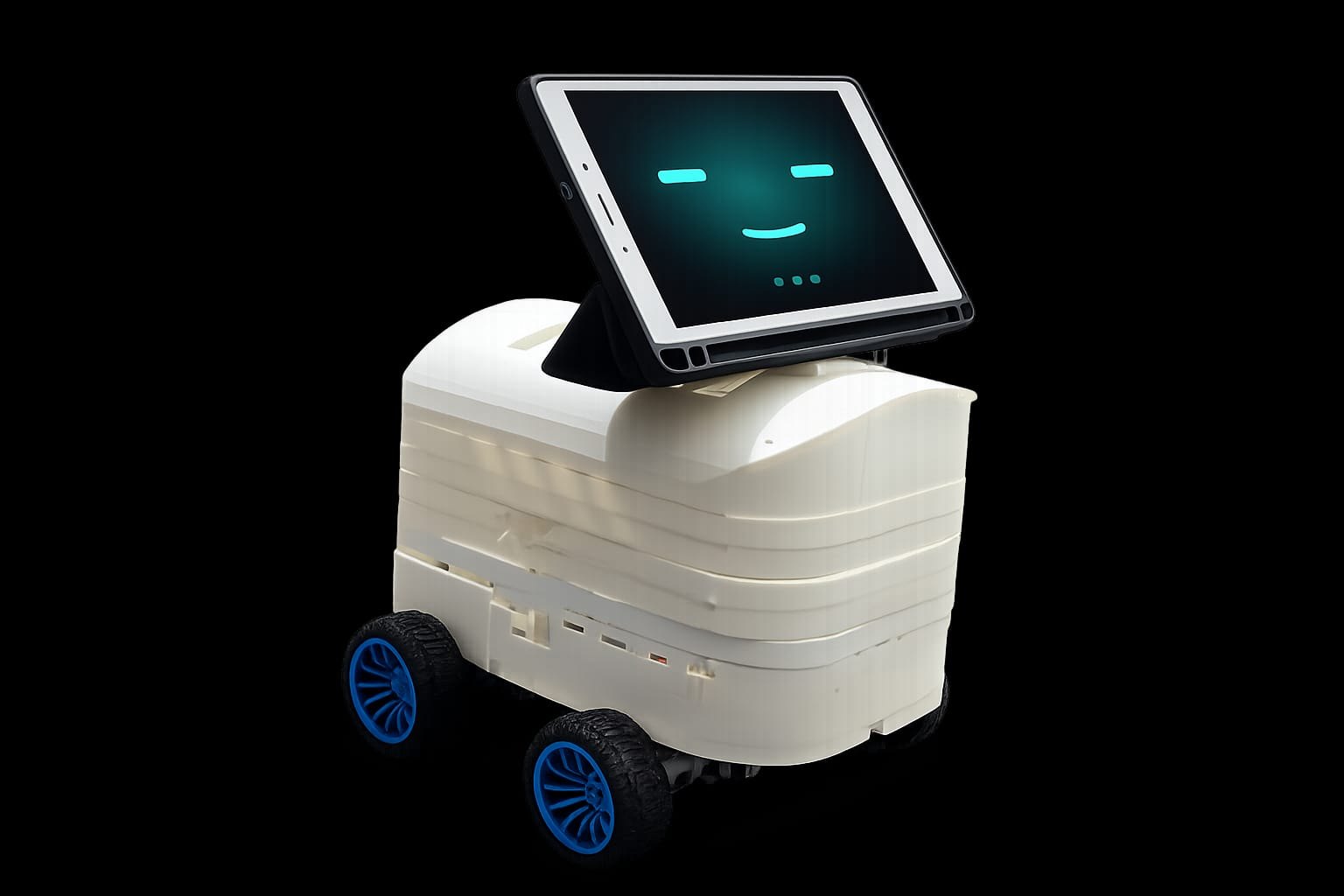
MuseBot AI
A mobile museum guide that follows a fixed gallery route, identifies each exhibit by RFID, and holds a spoken conversation grounded strictly in curator-approved facts — with a refusal, not a guess, when a question falls outside them.
- 2ndplace, WRO Bangladesh national final
- 40tour sessions recorded
- 87visitor questions answered
- 0wrong exhibit identifications
What comes next
Nothing else is built yet, and we are not going to list machines that do not exist. What we do have is a branch with people in it, a workflow that got one robot from a sketch to a national podium, and an open question about what the second one should be.
If you have an idea for a machine worth building — or you just want to learn this by doing it alongside people who have done it once — pitch it or come and say so in the Discord. Robotics projects here follow the same rule as every other project: public repo, open issues, anyone can pick up a task.
How we build
Three positions that came out of building MuseBot, and that carry to whatever comes next.
Use AI only where the problem is ambiguous
Everywhere the answer is knowable in advance — where the robot is, what is in front of it, what counts as approved fact — use a deterministic system, because a deterministic system can be tested until it is boring.
Cut what does not earn its place
MuseBot started as ROS 2, SLAM and camera-based object recognition. Most of it was removed because simpler systems met the requirement more reliably. Deliberate de-escalation of technology is an engineering position, not a retreat.
Build the one that runs
A machine on the floor beats a render in a slide deck. Every number we publish comes from a log file, and the things we designed but could not afford are listed as deferred, never as done.
Where a new person actually fits
A robot is four jobs at once, and only one of them involves a soldering iron. You do not need all four — you need one, and someone to ask about the rest.
Firmware and control
Real-time microcontroller work — sensor sampling, motor drive, serial protocols, debounce. The part where a millisecond actually matters.
Mechanical and electronics
Chassis design, mounting, power architecture, wiring. If you have never soldered anything, this is where people usually start.
AI and software
Retrieval, prompt construction, speech pipelines, web panels. Robotics is mostly software once the wheels turn.
Content and testing
Someone has to write what the robot says and then try to break it. Most of the bugs we found came from live end-to-end runs, not the bench.
Robotics is one route into competing for NebuCoders — not the only one.
WRO is where this branch started. The competitions door covers hackathons, olympiads and the rest, plus mentoring in both directions.
Robotics writing
How to Build a Line-Following Robot With Arduino: A Beginner's Guide
The real first-build failure points — wiring a motor driver backward, running out of pins halfway through, oscillating wildly on the track — and how to actually get a line-following robot working, not just wired.
RoboticsWhat We Learned Building a Self-Improving Museum Guide Robot for WRO 2026
Behind-the-scenes engineering notes from three students building MuseBot AI — the SLAM-and-ROS2 first draft that got cut, the Nano that quietly killed a week, and the two-tier memory system that turned out to be the actual invention.
Build the second one
Free, non-profit, open source, run by its members. If you want to learn this by building something that has to work in front of people on the first try, this is where to start.