A robot that explains museums — and just took 2nd place nationwide.
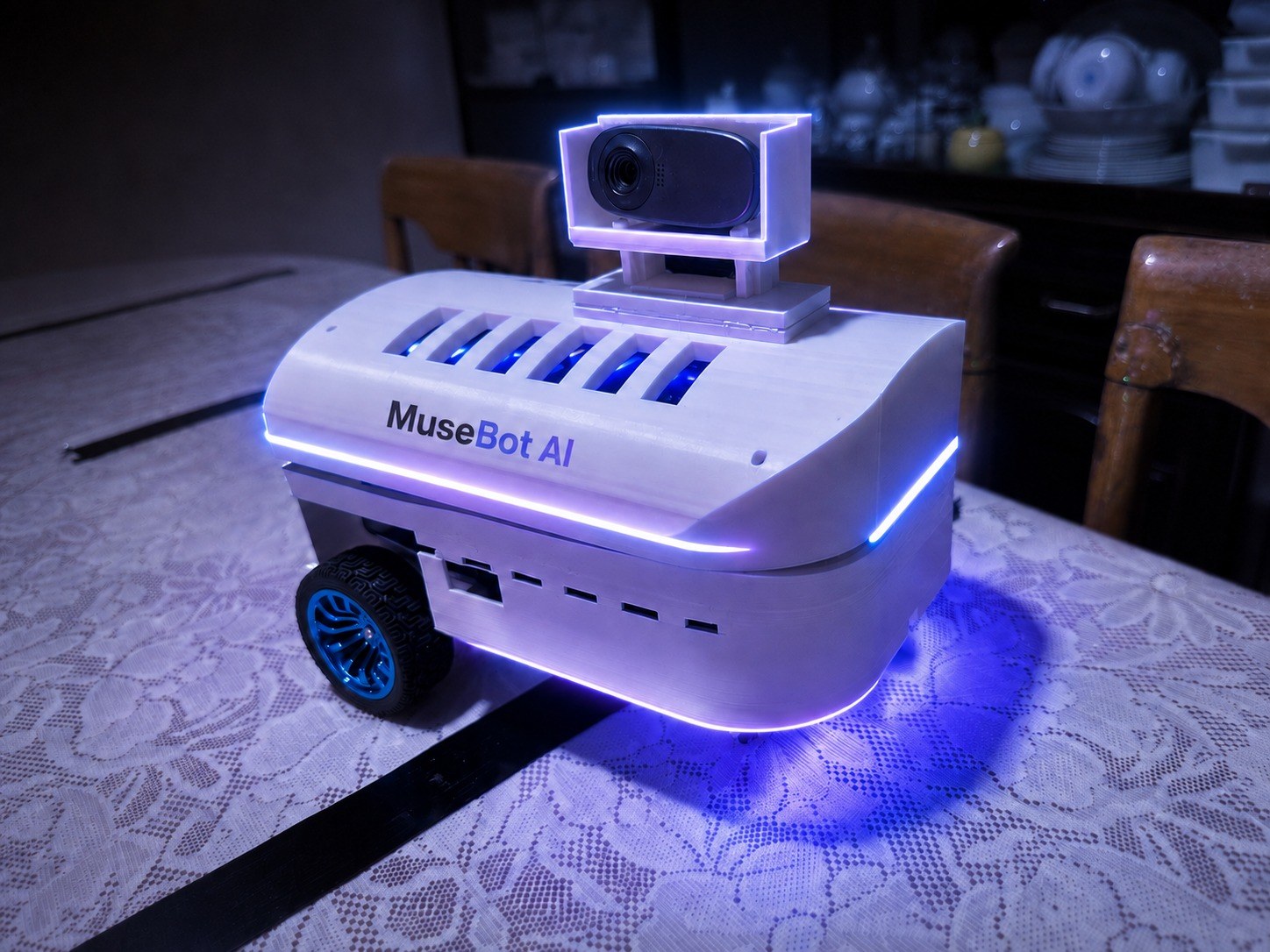
MuseBot AI is a self-improving museum guide robot, built by three NebuCoders members for WRO Future Innovators 2026. It earned 2nd place nationwide at the WRO Bangladesh National Final — and the team is now at a selection bootcamp, one step from representing Bangladesh at the WRO 2026 International Finals in Puerto Rico, USA.
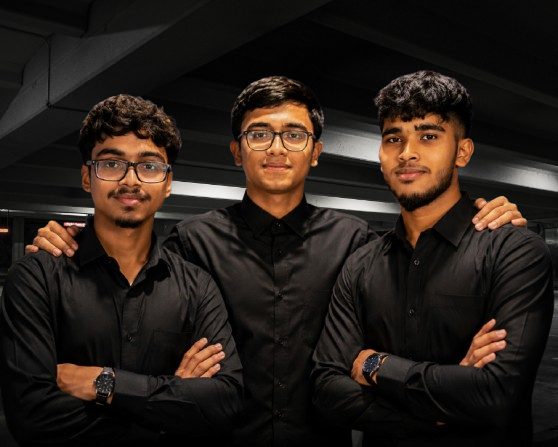
Team Nebucoders
Three students — Adal Zuhair Bhuiyan, Md. Hafizullah, and Sujail Bin Abdullah — designed, wired, and coded MuseBot AI end to end. Per WRO rules, every build decision, every line of code, and every booth design on the table is the team's own work.
What MuseBot AI actually does
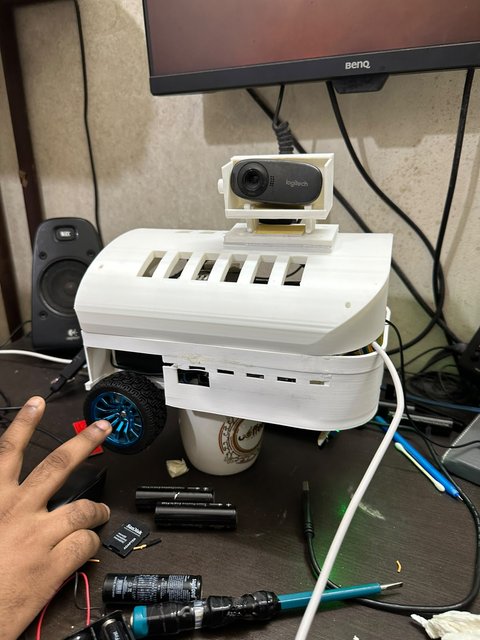
A museum guide robot for the small and regional museums that can't staff one — it walks a fixed route between exhibit booths, stops automatically, and talks.
Explains
Arrives at a booth, taps an RFID tag stationed there, and delivers a spoken explainer built from a human-curated fact sheet for that exact exhibit.
Listens
Asks visitors if they have questions, transcribes what it hears, and answers on the spot — referencing what the same visitor already asked at an earlier booth.
Remembers
Every question ever asked at a booth, across every tour, gets logged and folded into that booth’s explainer for the next visitor. It gets more informative the more it’s used.
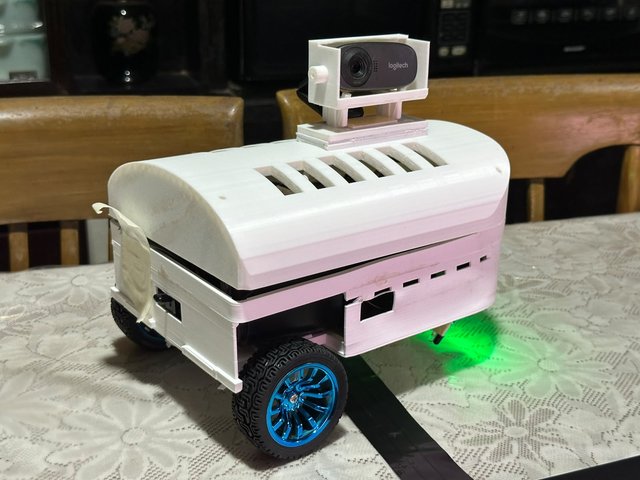
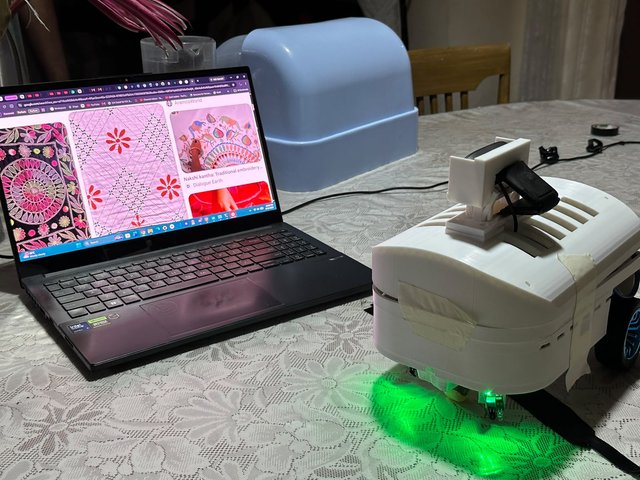
The engineering journey
The real lessons are in the mistakes and the cuts, not the clean final diagram.
-
Started big, cut to what could actually ship
The first draft was Ubuntu, ROS2, and SLAM-based navigation — a real architecture, and a six-to-twelve-month one. Three students building for a five-minute judging slot needed a different bet.
-
Line-following over free-roam navigation
A fixed taped route between booths trades "goes anywhere" for "goes exactly where we told it to, every time" — the right trade when the robot has to work in front of judges on the first try.
-
A tape stripe instead of a vision pipeline
QR codes and camera-based object recognition were both considered and dropped. A robot on a fixed track always meets booths in the same order — a perpendicular strip of tape crossing its path is enough to mark a stop.
-
Honest dead-reckoning over half-working steering
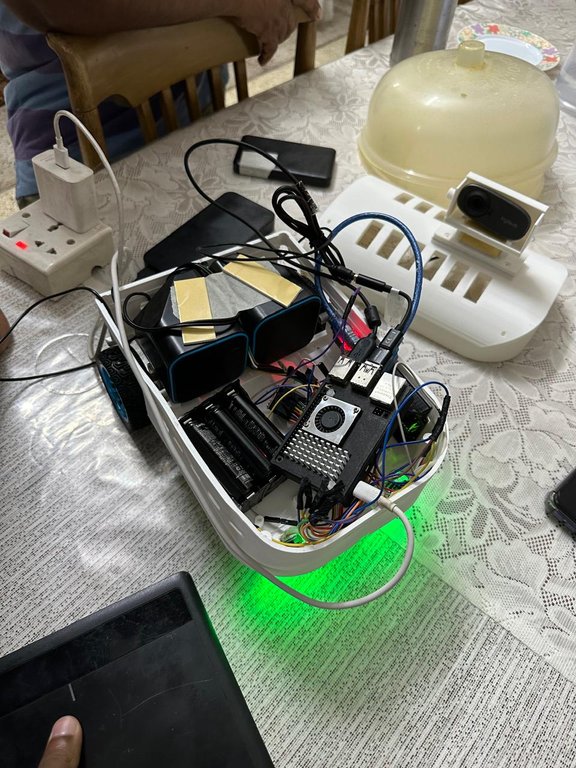
Swapping the 8-sensor QTR array for two simpler FC-51 sensors meant giving up proportional steering correction entirely — a binary on/off sensor can’t produce the error signal steering needs, so the team chose a straight, honest drive over a correction scheme that would only sort-of work.
-
A sturdier board, mid-build
Repeated upload failures on an Arduino Nano traced back to its fragile Mini-USB port — not the code. Same chip, same pin map, swapped for an Uno’s full-size USB-B port.
-
RFID, so exhibits aren’t locked to arrival order
An RC522 reader lets any booth’s exhibit be rebound to a tapped card from a small web panel — exhibits can be physically rearranged between booths without touching a single line of code.
How it works
Two brains, one robot
An Arduino Uno owns millisecond-precise driving and stop-tape detection — no AI, no network, nothing that can jitter. A Raspberry Pi 4B owns everything smart: speech, the LLM conversation, memory. They talk over a single USB cable.
RFID exhibit binding
Which exhibit sits at a physical stop is bound live from a web control panel, not hardcoded — tap a card, assign it to an exhibit, and the robot resolves the right knowledgebase on arrival.
Free to run
Chat and speech-to-text run on free API tiers; text-to-speech runs through edge-tts at no cost at all. A full multi-booth tour costs a fraction of a cent.
Per WRO Future Innovators rule 6.5, the team's project report discloses every use of AI in the build. Claude helped implement decisions the team had already made — the wiring, the Arduino sketch, the Python conversation pipeline — while every architecture choice and every hour of physical construction stayed the team's own. It's the same "AI drafts, you verify" standard NebuCoders holds every project to.
The road to Puerto Rico
A 2nd-place finish at Bangladesh's national final put the team through to the WRO Bangladesh National Selection Bootcamp. Make it through that, and MuseBot AI represents Bangladesh at the WRO 2026 International Finals in Puerto Rico, USA.